
Why Karupatti Is Better Than White Sugar: Benefits, Nutrition and Key Differences
Many Indian households are paying closer attention to the ingredients they use every day, especially when it comes to sweeteners. As interest in traditional food choices continues to grow, more people are comparing natural alternatives with refined sugar.
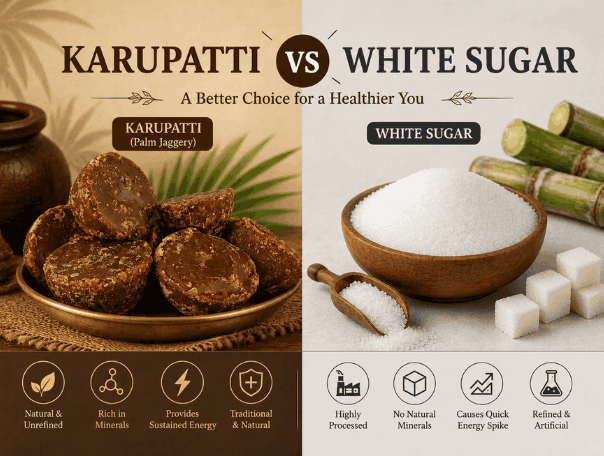
When discussing karupatti vs white sugar, many people are surprised to learn that the two are quite different in how they are produced and what they contain. At Halwa King, we regularly see customers choosing karupatti based sweets because they appreciate traditional ingredients and authentic South Indian flavours.
Understanding the differences between karupatti and white sugar can help you make more informed choices while enjoying your favourite sweets in moderation.
What Is Karupatti?
Karupatti is a traditional sweetener made from the sap of palm trees.
The collected sap is heated and concentrated until it forms solid blocks of palm jaggery.
Unlike refined sugar, karupatti undergoes minimal processing. This traditional preparation method has been followed for generations across South India.
Why Karupatti Has Been Used for Generations?
Long before refined sugar became widely available, families used karupatti in a variety of traditional foods and sweets. Its rich flavour and distinctive taste made it a popular ingredient in many South Indian recipes.
Even today, many households continue to use karupatti because it remains closely connected to traditional cooking practices and regional food culture.
Karupatti vs White Sugar: Understanding the Key Differences
Karupatti and white sugar differ in their source, processing methods and overall characteristics. Understanding these differences can help consumers choose the sweetener that best suits their preferences and cooking needs.
1. Source and Production Process
One of the biggest differences between palm jaggery and white sugar is how they are produced.
Karupatti is made from the sap of palm trees, which is slowly heated and concentrated using traditional methods. White sugar is generally produced from sugarcane or sugar beet and undergoes multiple stages of refining before reaching consumers.
2. Processing and Refinement
Karupatti is typically processed using traditional techniques with minimal refinement, allowing it to retain its natural appearance and distinctive characteristics.
In contrast, white sugar undergoes extensive refining to produce uniform white crystals and remove impurities, resulting in a consistent texture and sweetness.
3. Taste, Colour and Texture
Karupatti has a deep brown colour, a soft texture and a rich flavour that many people describe as earthy and distinctive.
White sugar has a clean, neutral sweetness with a crystalline texture. Because of these differences, each sweetener creates a unique flavour profile when used in beverages, desserts and traditional recipes.
Palm Jaggery vs Sugar: Nutritional Comparison
One reason many people discuss the benefits of palm jaggery is that it naturally contains minerals that are generally not associated with refined white sugar. While both are sweeteners, their nutritional characteristics differ.
1. Essential Minerals Found in Karupatti
Palm jaggery naturally contains small amounts of minerals that may include:
- Iron
- Calcium
- Potassium
- Magnesium
The exact nutritional composition may vary depending on the source of the palm sap and the traditional production method used.
2. Nutritional Profile of White Sugar
White sugar is primarily a source of calories and sweetness. During the refining process, many naturally occurring minerals and other components present in the original source are removed, resulting in a highly refined product.
3. Palm Jaggery Nutrition at a Glance
When discussing palm jaggery nutrition, it is important to remember that karupatti is still a sweetener and should be consumed in moderation.
However, its naturally occurring mineral content and traditional preparation method are among the reasons many people choose palm jaggery instead of refined white sugar.
Top Benefits of Karupatti
1. Contains Naturally Occurring Minerals
One of the most commonly discussed benefits of karupatti is that it naturally contains minerals, which are generally absent or present only in very small amounts in refined white sugar.
2. Provides Sustained Energy
Many people believe that karupatti provides a steadier source of energy compared to highly refined sweeteners. Although individual experiences may vary, this is one reason it continues to be included in traditional diets.
3. Traditional Alternative to Refined Sugar
Karupatti remains a popular choice for those looking for a traditional alternative to refined sugar. Its rich, distinctive flavour adds depth to recipes while preserving authentic cooking traditions.
4. Popular Choice in Traditional South Indian Foods
Many South Indian dishes continue to use karupatti because it complements traditional recipes and enhances their authentic taste. It is commonly used in sweets, beverages and festive preparations across the region.
Is Karupatti Better Than Sugar?
This is one of the most common questions people ask when comparing traditional and refined sweeteners. The answer depends on individual preferences, dietary goals and how the sweetener is used.
Many people prefer karupatti over white sugar because it is traditionally prepared, undergoes less refinement and naturally contains small amounts of minerals.
When Karupatti May Be Preferred
Karupatti may be a suitable choice for individuals who:
- Appreciate traditional ingredients and preparation methods.
- Prefer less refined sweeteners.
- Enjoy its rich and distinctive flavour.
- Value traditional South Indian food practices and recipes.
Things to Consider Before Replacing Sugar
Although karupatti offers certain characteristics that many consumers appreciate, it is still a sweetener and should be consumed mindfully.
People with specific dietary requirements or health concerns should consult a qualified healthcare professional for personalised nutritional advice before making significant dietary changes.
The Importance of Moderation
Whether you choose karupatti or white sugar, moderation remains essential as part of a balanced diet. No single ingredient determines overall health, and healthy eating habits are built on variety and portion control.
This balanced perspective helps answer the question, Is karupatti better than sugar? For many consumers, the answer depends on their personal preferences, nutritional goals and intended use in everyday cooking.
Traditional South Indian Sweets Made with Karupatti
Why Karupatti Is Popular in Traditional Recipes
Karupatti has been used in South Indian kitchens for generations and continues to be a preferred ingredient in many traditional sweets and snacks. Its rich flavour adds depth to recipes and gives them a distinctive taste that many people associate with homemade food.
Unlike refined sugar, karupatti contributes both sweetness and character to a dish. This is one reason it is commonly used in traditional preparations such as paniyaram, kozhukattai, payasam and various regional sweets.
Many families continue to use karupatti because it is closely connected to traditional cooking practices passed down through generations. Its unique flavour pairs well with ingredients such as coconut, cardamom, ghee and wheat milk, making it a popular choice for a wide range of South Indian recipes.
Tirunelveli Karupatti Halwa - A Timeless Favourite
Among traditional sweets, Tirunelveli Karupatti Halwa remains a favourite for those who appreciate authentic South Indian flavours.
Prepared using quality ingredients and traditional techniques, this halwa combines the rich taste of karupatti with the soft, glossy texture for which Tirunelveli Halwa is well known. The use of palm jaggery gives the sweet a distinctive flavour that sets it apart from versions made with refined sugar.
For many customers, Tirunelveli Karupatti Halwa offers the opportunity to enjoy a traditional sweet while experiencing the unique taste that karupatti brings to the recipe. Its lasting popularity reflects the continuing importance of traditional ingredients in South Indian food culture.
Why Karupatti Halwa Is Becoming Popular Among Sweet Lovers?
Many customers today are looking for sweets that combine traditional recipes with authentic ingredients. This growing interest has increased the popularity of karupatti-based sweets, especially among people who appreciate regional flavours and time-honoured preparation methods.
Those looking to buy authentic Tirunelveli Karupatti Halwa online often prefer products prepared using trusted recipes, quality ingredients and traditional cooking techniques.
Tips for Buying Authentic Karupatti Sweets Online
1. Check the Ingredients
Authentic products should clearly list the ingredients used in preparation. When buying karupatti-based sweets, choose products made with genuine palm jaggery rather than those that rely primarily on refined sugar. Reading the ingredient list helps you make a more informed choice.
2. Look for Traditional Preparation Methods
Traditional preparation methods play a significant role in the flavour and texture of karupatti sweets. Products prepared using established recipes and techniques are more likely to deliver the authentic taste that customers expect from traditional South Indian sweets.
3. Choose Trusted Tirunelveli Brands
Selecting a trusted Tirunelveli sweet maker can provide greater confidence in both quality and authenticity. Established brands with experience in traditional recipes are often preferred by customers seeking genuine regional flavours.
At Halwa King, customers can buy authentic Tirunelveli Halwa online and explore a range of traditional varieties prepared with quality ingredients and time-tested methods.
Final Thoughts
Karupatti and white sugar are both widely used sweeteners, but they differ in their production methods, flavour profiles and nutritional characteristics.
Many people continue to choose karupatti because of its traditional preparation, distinctive taste and naturally occurring minerals. While it should be consumed in moderation like any other sweetener, karupatti remains an important part of South Indian culinary traditions and regional sweets.
For those who appreciate authentic flavours, karupatti-based sweets offer a delicious way to experience one of South India's most cherished traditional ingredients while preserving the rich heritage of regional recipes.
FAQ
1. What is karupatti made from?
Karupatti is made from the sap collected from palm trees, which is traditionally heated and concentrated to produce palm jaggery.
2. Is karupatti healthier than white sugar?
Karupatti is less refined than white sugar and naturally contains small amounts of minerals. However, both are sweeteners and should be consumed in moderation as part of a balanced diet.
3. What nutrients are found in karupatti?
Karupatti may naturally contain small amounts of minerals such as iron, calcium, potassium and magnesium, although the exact composition can vary depending on how it is produced.
4. Why is karupatti used in traditional South Indian sweets?
Its rich flavour, traditional preparation method and distinctive taste make karupatti a popular ingredient in many authentic South Indian sweets and regional recipes.
5. Where can I buy authentic Tirunelveli Karupatti Halwa?
You can purchase authentic Tirunelveli Karupatti Halwa from trusted Tirunelveli sweet makers that follow traditional preparation methods and use quality ingredients.